
Table of Contents
- How to Break in New Heels Before Your Wedding
- Start Your Foot Care Routine Two Weeks Out
- Use Foot Comfort Spray for Heels on Wedding Day
- Tips for Wearing Heels All Day: Pre-Event Prep
- Surface-Specific Stability: What to Expect
- Reception Footwear Strategy and Heel Stoppers
- Post-Wedding Recovery Protocol
- Conclusion
Last Updated: August 27, 2026
How to Break in New Heels Before Your Wedding
The biggest mistake brides make is waiting until the wedding day to discover whether their heels actually work. Breaking in new heels before your event isn't optional, it's the foundation of everything else that follows. You need to know exactly how your feet will respond to hours of standing, walking, and dancing before you're committed to wearing them on the most important day of your life.
Start breaking in your heels at least two weeks before the wedding. Wear them around your house for 30 minutes at a time, gradually increasing the duration. This allows the leather or synthetic material to mold to your foot's unique shape while giving you time to identify problem areas, tight spots, pressure points, or areas where blisters might form.
The goal isn't comfort yet. It's familiarity. Your feet need to adapt to the heel height, the arch support, and the way your weight distributes differently than in flat shoes. During this phase, pay attention to which parts of your foot experience the most pressure. The toe box, the ball of your foot, the heel counter, and the sides of your foot are common pressure points that need attention before wedding day.
Start Your Foot Care Routine Two Weeks Out
Your feet need preparation time just like your skin does before a big event. Two weeks out is your window to establish a foot care regimen that reduces swelling, strengthens your feet, and conditions the skin to handle hours in heels.
Condition Your Feet Daily
Dry skin on your heels and the balls of your feet creates friction. Friction creates blisters. Combat this by moisturizing your feet every single day for the two weeks leading up to your wedding. Use a rich foot cream or lotion, focusing on the heel, the ball of the foot, and any areas where you noticed pressure when breaking in your heels.
The conditioning process also improves circulation. Better circulation means less swelling and more resilience when you're standing for extended periods. Massage your feet for 5-10 minutes each evening, working from your toes up toward your calves (peer-reviewed research). This isn't just comfort, it's prevention.
Exfoliate your feet gently 2-3 times during the two-week period (the American Academy of Dermatology). Remove dead skin that could cause blistering, but don't overdo it. Your skin needs to be healthy and intact on wedding day, not raw or irritated from aggressive exfoliation.
Practice Walking in Your Heels
Wearing your heels around the house is one thing. Walking in them is another. Practice your wedding day movements: walking down the aisle, standing still for photos, pivoting to dance, walking on different surfaces. Tile behaves differently than carpet. Hardwood is different from grass. If your wedding includes outdoor elements or a venue with mixed flooring, practice on those surfaces if possible.
Pay special attention to stairs. Many weddings involve staircases, either at the venue or during the reception. Walking down stairs in heels requires a different technique than walking on flat ground. Your center of gravity shifts. Practice this movement until it feels natural, not panicked.
During practice walks, note any new pressure points or discomfort you didn't notice during the initial break-in period. This is your chance to address them before wedding day. If a particular spot causes pain, you'll need to add padding or use anti-friction balm in that exact location.
Use Foot Comfort Spray for Heels on Wedding Day
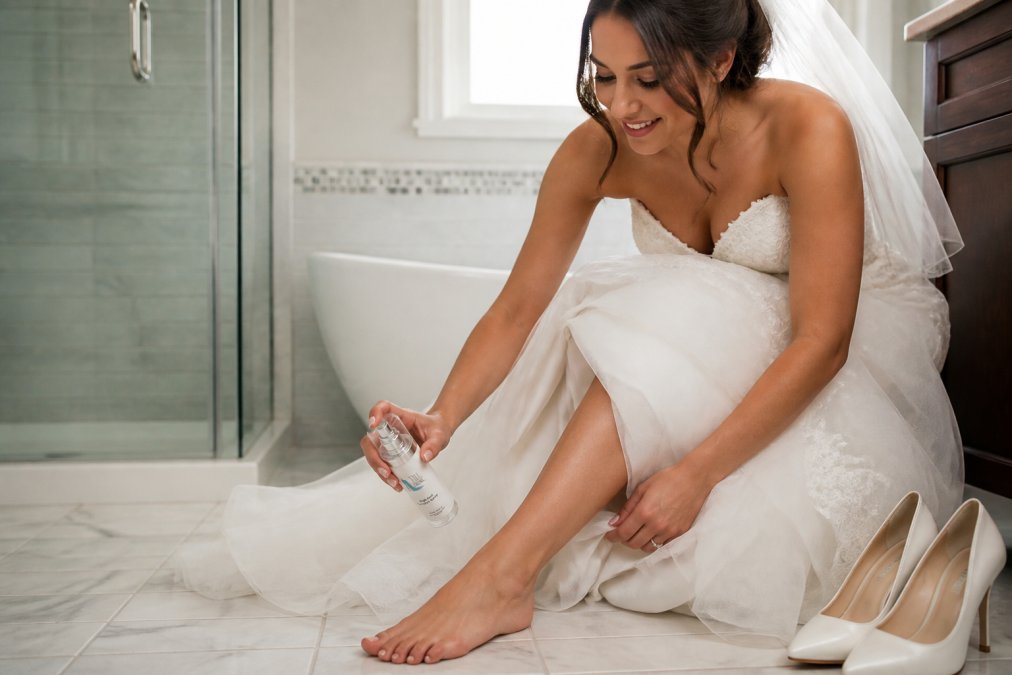
The right foot comfort spray makes the difference between surviving your wedding in heels and actually enjoying it. Still Standing® Spray's non-numbing formula prevents foot pain without the dangerous side effects of numbing products that can cause you to lose your footing at critical moments.

Why Non-Numbing Formulas Work Better
Numbing sprays and creams might seem like the obvious solution, but they create a serious problem: if you can't feel your feet, you can't feel if you're about to trip, stumble, or lose your balance. Wedding venues have stairs, uneven floors, and outdoor terrain. Losing sensation in your feet means losing your ability to navigate these safely.
Still Standing® Spray works differently. Its cooling menthol formula combined with plant-derived, anti-inflammatory ingredients reduces pain without numbing. You still feel your feet, you just feel them without the sharp, throbbing discomfort that comes from hours in heels. This means you can walk confidently, dance without fear, and maintain the stability you need for those critical moments like walking down the aisle or standing for formal photos.
Application Timing and Technique
Apply Still Standing® Spray about 15-20 minutes before you put on your heels (peer-reviewed research). This gives the formula time to absorb and activate. Spray it directly onto the soles of your feet, the balls of your feet, your heels, and any areas where you experienced pressure during your practice sessions.
Use a light, even application, you don't need to saturate your feet. The spray works through absorption, not through soaking. Once you've applied it, let your feet dry for a minute before putting on your hosiery and shoes. This prevents the spray from transferring onto your stockings or the inside of your heels.
Reapplication depends on how long you'll be in heels. For a typical wedding ceremony and reception lasting 6-8 hours, one application usually lasts through the event. If you're wearing heels for longer than 8 hours, bring a Still Standing® Spray - Mini in your emergency kit for a touch-up application during the reception.
Tips for Wearing Heels All Day: Pre-Event Prep
Beyond foot comfort spray, several tactical additions to your foot care arsenal significantly extend your comfort window.
Gel Insoles and Metatarsal Pads
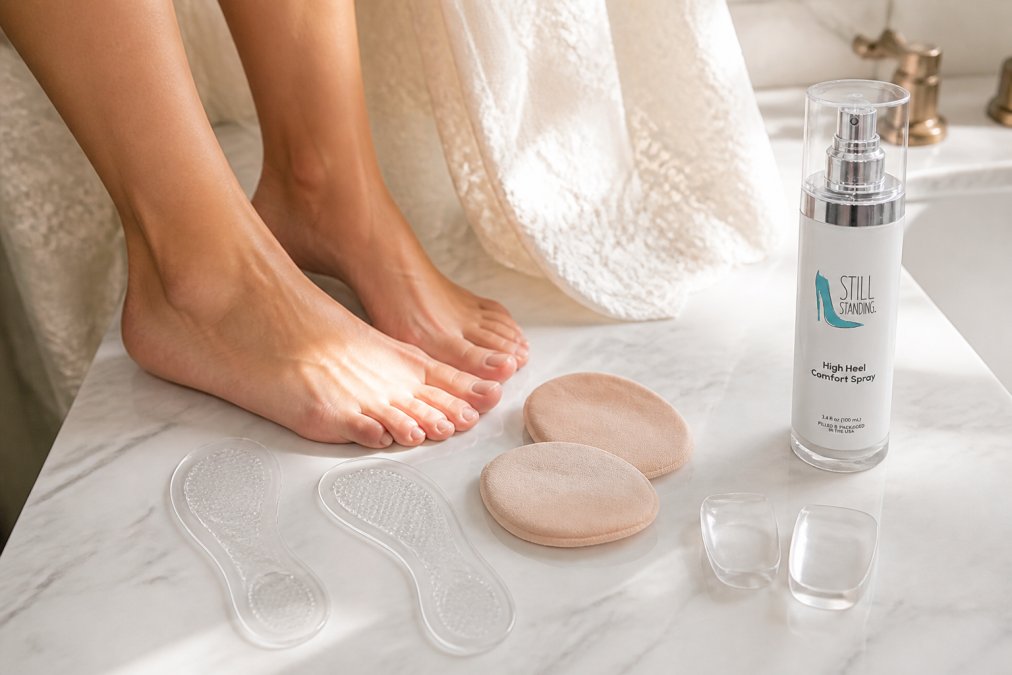
Gel insoles distribute pressure across the entire sole of your foot, reducing the concentration of force on the ball of your foot and heel. Insert them into your heels during your practice sessions, not for the first time on wedding day. Your foot needs to adjust to the additional cushioning, and you need to verify the insoles don't make your heels too tight.
Metatarsal pads are smaller, targeted cushions that sit under the ball of your foot. This area absorbs enormous pressure when you're in heels, especially if your heel height is 3 inches or taller. A quality metatarsal pad redistributes that pressure and reduces the burning sensation many people experience after hours in heels. style your wedding jewelry.
Anti-Friction Balm and Blister Prevention
Anti-friction balm creates a protective barrier between your skin and the inside of your shoe. Apply it to your heels, the sides of your feet, and any area where you know pressure points exist. This balm prevents blisters from forming, which is infinitely easier than treating a blister that's already started.
Blister prevention is about reducing friction and moisture. Your feet sweat during a wedding, from nerves, from standing, from the physical activity of dancing. Sweat increases friction. Anti-friction balm counteracts this. Apply it fresh in the morning before your hosiery and heels go on, and consider a second application during the reception if you have access to a private moment.
Surface-Specific Stability: What to Expect
Different surfaces demand different techniques when you're in heels. Understanding what to expect prevents falls and builds confidence.
Grass and outdoor terrain are the most challenging. Heels sink into soft ground, creating an unstable base. If your wedding includes an outdoor ceremony or garden reception, practice walking on grass in your heels beforehand. Walk slowly, deliberately, and consider using heel protectors or stoppers that prevent your heel from sinking. The slight elevation these provide makes an enormous difference on soft ground.
Tile and polished hardwood are slippery. Your heel can slide forward unexpectedly, throwing off your balance. Walk more deliberately on these surfaces. Take shorter steps. Avoid sudden direction changes. If your venue has particularly slippery flooring, ask the venue coordinator about using non-slip products on your heel tips.
Carpet provides the most stability. Your heels grip the fibers, giving you solid footing. This is where you can walk most naturally and with the least caution. If your ceremony is on carpet and your reception is on tile, mentally prepare for the transition. The stability changes dramatically.
Stairs require you to lead with the ball of your foot, not the heel. Place the ball of your foot on the stair first, then lower your heel. This technique prevents your heel from catching on the stair edge and gives you better control. Practice this on a staircase at home until it becomes automatic.
Reception Footwear Strategy and Heel Stoppers
Many brides wear their wedding heels for the ceremony and formal photos, then change into more comfortable shoes for the reception. This is a completely valid strategy. You don't have to suffer through dancing in the same heels you wore for the aisle walk.
If you're planning to change shoes, have your reception footwear broken in and ready. Many brides choose flats, lower heels, or even comfortable sandals for the reception portion. This strategy lets you maintain the formal look for the ceremony while prioritizing comfort and mobility for dancing.
If you're keeping the same heels on all night, heel stoppers are non-negotiable. These small rubber or plastic attachments fit onto the bottom of your heel tips, preventing them from catching on dress hems, floor cracks, or outdoor terrain. They also reduce the noise your heels make on hard flooring, which matters during the ceremony when every sound carries. Heel stoppers are inexpensive and make a measurable difference in stability and safety.
Apply heel stoppers before the wedding, not at the last minute. They need to be secure and properly seated. If they come loose during the event, you lose the protection they provide.
Post-Wedding Recovery Protocol
Your feet have worked hard. Recovery matters, especially if you're heading on a honeymoon or have other events lined up.
Immediately after the wedding, remove your heels and elevate your feet for at least 30 minutes. This reduces swelling and gives your feet a chance to decompress. Ice your feet for 10-15 minutes if you experience significant swelling or soreness.
Soak your feet in warm water with Epsom salt the evening after the wedding. This reduces inflammation and helps your muscles recover from the sustained tension of being in heels. Soak for 15-20 minutes, then moisturize thoroughly.
Massage your feet and calves the day after the wedding. Your calf muscles have been in a shortened position all day, and they need gentle stretching and massage to recover. This reduces soreness and helps prevent cramping.
Avoid wearing heels for at least 2-3 days after the wedding if possible. Give your feet time to fully recover. If you must wear heels during this recovery period (honeymoon departure, post-wedding events), keep them lower and limit the duration.
Watch for blisters that might have formed but weren't noticeable during the adrenaline and excitement of the wedding. Treat any blisters immediately with proper wound care. A blister that develops after the event needs attention to prevent infection.
Your wedding day deserves to be remembered for the joy and celebration, not for foot pain. By starting your foot care routine two weeks out, practicing in your heels, and using Still Standing® Spray on the day itself, you transform the experience from endurance into enjoyment. The Still Standing® Spray - Large gives you everything you need to survive wedding in heels with confidence. With our 30-day money-back guarantee, there's no risk in making sure your feet stay comfortable while you celebrate the day that matters most.

Frequently Asked Questions
How do I break in heels before my wedding without causing blisters?
Break in your wedding heels gradually over 2-3 weeks by wearing them for short periods around your home, increasing duration each day. Apply anti-friction balm to pressure points before wearing. Use a shoe stretcher overnight to gently expand the toe box and heel. Wear thick socks while breaking them in to reduce friction. Condition leather heels with a leather conditioner to soften the material. This approach prevents blisters while molding the shoe to your foot shape naturally.
Why should I use a foot comfort spray for heels instead of numbing products?
Non-numbing foot comfort sprays like Still Standing® Spray work by reducing inflammation and providing cooling relief while keeping your feet responsive to movement and balance. Numbing products eliminate sensation entirely, which can cause dangerous falls on slippery surfaces like dance floors or outdoor venues. A non-numbing formula prevents pain without sacrificing stability, allowing you to feel confident and safe throughout your wedding day.
What's the best way to manage foot swelling during a long wedding day?
Manage foot swelling by elevating your feet whenever possible during pre-wedding preparations, wearing compression socks the morning of the event, and staying hydrated throughout the day. Use gel insoles and metatarsal pads to reduce pressure on swollen areas. Apply a foot comfort spray before putting on your heels. During the reception, take brief breaks to sit down and remove your shoes. Post-event, soak your feet in cool water with Epsom salt to reduce inflammation and aid circulation recovery.
How long does one bottle of foot comfort spray last if I wear heels multiple times weekly?
A standard bottle of foot comfort spray typically lasts 4-6 weeks with regular use on multiple occasions per week. The Still Standing® Spray Mini ($20) is portable and lasts 2-3 weeks, making it ideal for frequent heel wearers or travel. The Large bottle ($40) offers better value for regular users. For extended heel-wearing lifestyles, the Comfort Set provides both sizes at a better overall price point.